Back to the rooftop

Projects & Work.

Things I’ve built.
Models I’ve trained. Flags I’ve hidden.

AI tools, experiments, competition runs, and a few very intentional vulnerabilities. This is where the work lives.

Built to do something.

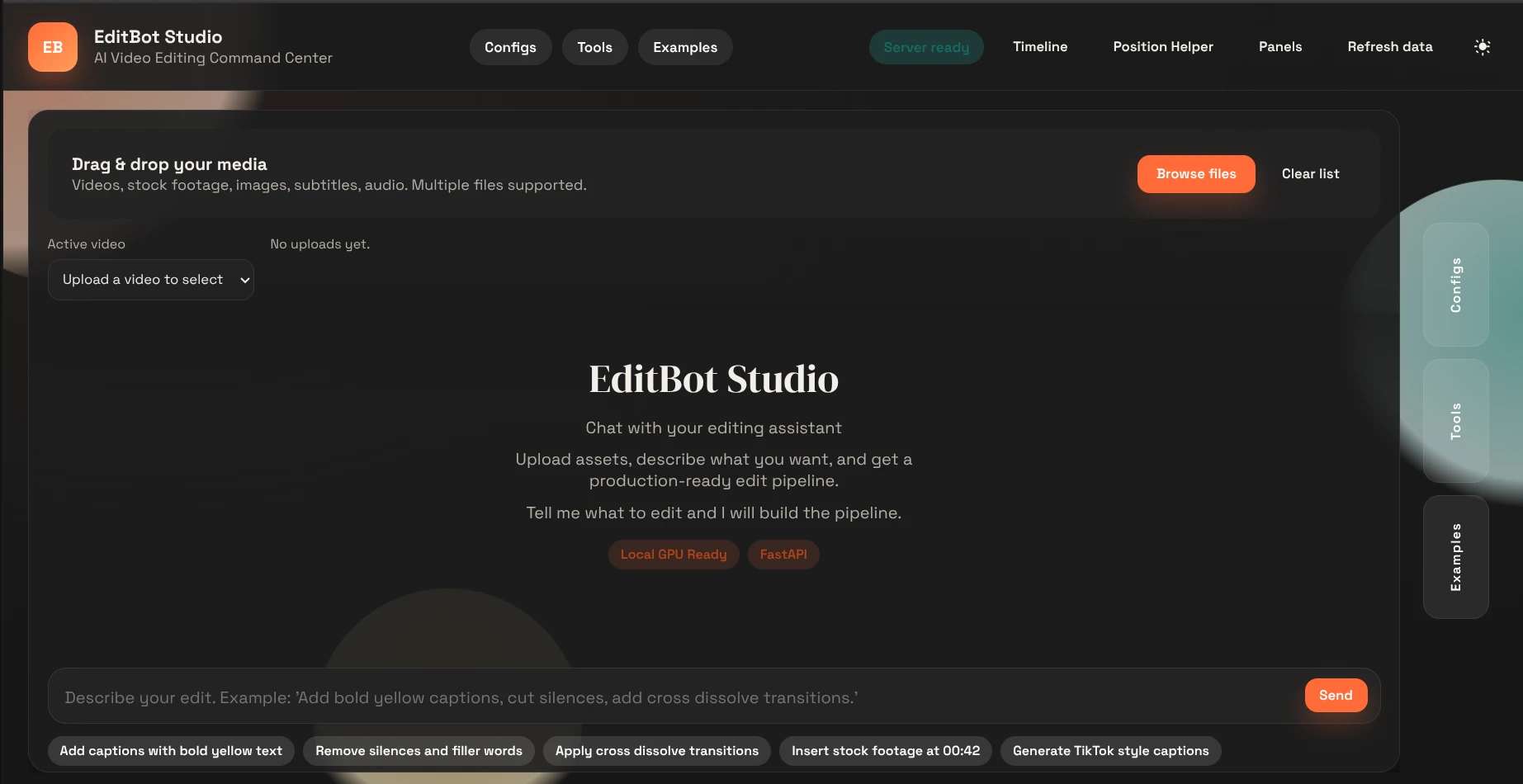
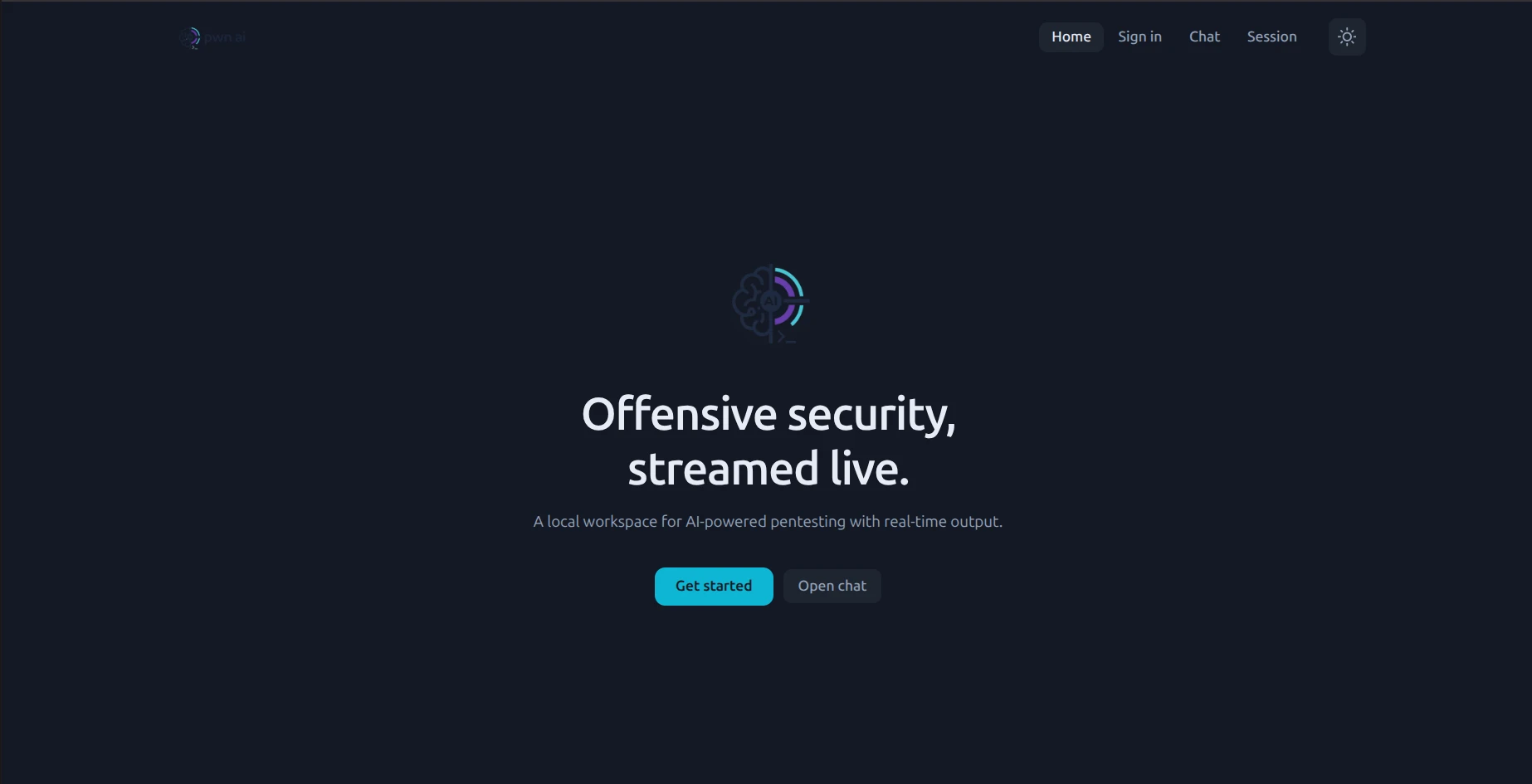
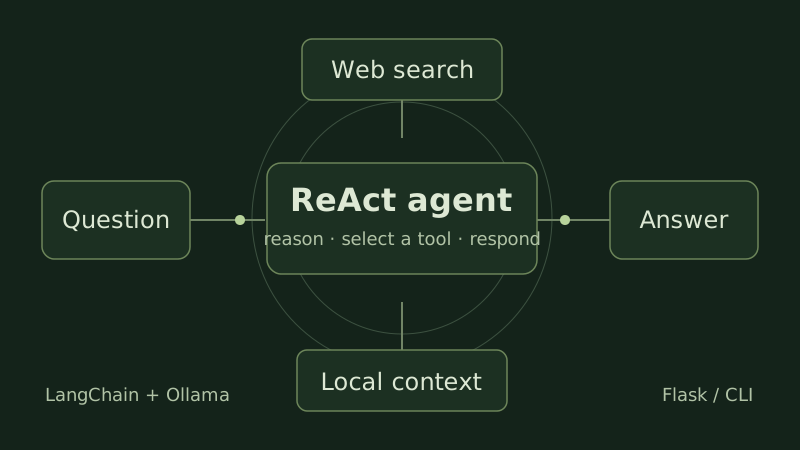
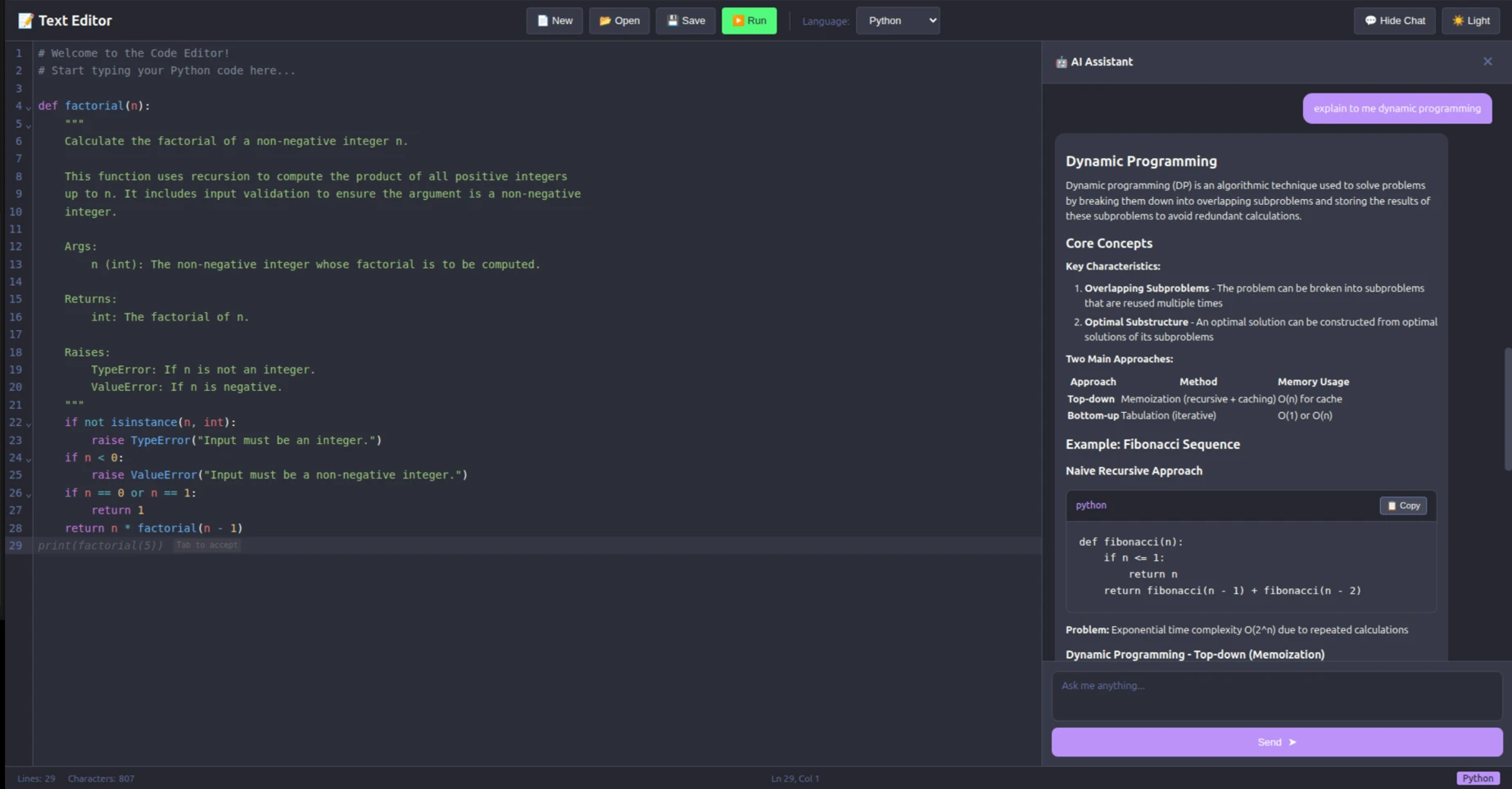
From a conversational video editor to agents that look for weak spots. The useful part starts when the idea meets a real workflow.

Nomad

Six agents. One relocation workflow.

A relocation workspace built during my AI Micromind training. Six specialized agents bring visa research, documents, housing, budgets, and changing plans into one persistent workspace.

Multi-agent systems · Full-stack · AI Micromind

Internship project

Explore the project
A walk through Nomad · 5:50 · English & Arabic subtitles

Ran it. Learned from it.

Published experiments in vision, bioacoustics, tabular learning, translation, and data analysis. Open a notebook for the code and outputs.

CSIRO Dino V2 Model + Advanced TTA + NDVI

Computer vision

A pasture-biomass experiment built around DINOv2 image features and test-time augmentation. It also explores how vegetation measurements and image features could be combined, keeping image preparation, model definitions and submission generation in one notebook.

Images are divided into left and right views and encoded through tiled, multi-scale blocks. The prediction path loads fold checkpoints, averages model and augmentation outputs, and reshapes the results into the competition’s required target rows.

  • Includes an NDVI-and-height feature-engineering path alongside the image models.
  • Uses non-negative biomass outputs and relationships between the target quantities.
  • Checks submission structure and summarizes the generated predictions.

With Kareem Hesham Dallash.

Kaggle · 2m 32s · GPU T4 x2

Silver notebookSuccessful run
1

BirdCLEF+ 2026 | Two-Branch Perch + SED + Sidecar

Bioacoustics

A BirdCLEF soundscape workflow that brings two different kinds of audio evidence together: Perch representations and a distilled sound-event detector. The notebook keeps each branch visible before combining their predictions for the final species-probability submission.

The Perch branch works with soundscape windows, cached embeddings, small probe models and lightweight sequence models. A separate public SED branch supplies another view of the audio. The final stage aligns their rows and species columns before rank-based blending and temporal post-processing.

  • Builds a target matrix for the competition’s 234 classes.
  • Includes site/hour priors, calibration and sequence-aware corrections.
  • Keeps optional CV9245 and BirdNET sidecars separate from the core branches.

Kaggle · 9m 57s

Bronze notebookSuccessful run
2

Student Scores | TabM + XGB + Advanced FE

Tabular ML

A staged regression experiment for predicting student test scores from tabular data. Rather than stopping at one model, it builds a linear component, a boosted-tree component and a TabM component, then combines their predictions.

Feature engineering runs before the modelling stages. Cross-validated Ridge predictions become an additional input for the later models, while categorical preprocessing is adapted to each model family. The notebook then creates a weighted ensemble, saves out-of-fold predictions and prepares submission files.

  • Uses K-fold training and out-of-fold predictions for the stacked workflow.
  • Combines Ridge, XGBoost and TabM predictions with explicit blend weights.
  • Contains a separate external-submission blending step and target-range clipping.

Kaggle · 1h 37m 48s · GPU T4 x2

Bronze notebookSuccessful run
3

BirdCLEF+ 2026 | EOS Parity Inference

Bioacoustics

An adapted BirdCLEF inference notebook that makes the relationship between audio branches explicit. It builds on youssef abukhalifa’s published pipeline, with attention to species mapping, probability blending and the exact submission format.

Perch features, probe models and sequence corrections feed one branch; a distilled sound-event model feeds another. The code treats directly mapped and unmapped species differently, then creates several candidate blends while keeping row order and species columns aligned.

  • Includes per-class ensemble weights based on Perch label coverage.
  • Explores rank/mean mixing and global versus per-file ranking.
  • Writes separate EOS blend variants for comparison rather than hiding the choices.

Adapted from youssef abukhalifa.

Kaggle · 6m 41s

Bronze notebookSuccessful run
4

ML Mania 2026 - Historical Outcome blending

Sports prediction

A retrospective matchup experiment for March Machine Learning Mania 2026. It asks how the required submission IDs relate to games already present in the historical results, then turns that lookup into a reproducible submission.

Each matchup ID is parsed into season and team IDs. Men’s and women’s compact results are combined into a normalized lookup, retaining the latest recorded game for repeated pairs. Known matchups receive their recorded outcome; unmatched IDs receive a neutral 0.5 probability.

  • Reads the official sample submission to preserve the requested ID order.
  • Checks row counts and probability bounds before exporting.
  • Writes a diagnostics JSON alongside submission.csv.

Kaggle · 24s

Bronze notebookSuccessful run
5

Image Based Eye Diseases Detection

Computer vision

A retinal-image classification study inspired by a transfer-learning paper. The notebook narrows the dataset to normal, glaucoma and cataract images, then explores a ResNet50-based implementation of the classification workflow.

It starts with class counts and visual sample checks, creates numeric labels and stratified data splits, and builds PyTorch datasets and loaders. Training uses image augmentation, a pretrained backbone and a custom classifier head, followed by saved-model evaluation and visual analysis.

  • Training transforms include cropping, flips, rotation and color jitter.
  • Uses AdamW, validation-loss scheduling and best-checkpoint saving.
  • Includes classification reports, a confusion matrix and per-class ROC curves.

Kaggle · 10m 1s · GPU T4 x2

Successful run
6

testing-temporal-flip

Bioacoustics

A BirdCLEF experimentation branch published as testing-temporal-flip. Its current source retains a Perch/ProtoSSM and SED core while exploring additional prediction sources, so the ensemble can be examined as a set of separate, configurable components.

Soundscapes are divided into windows, converted into embeddings and class scores, and combined through sequence models, probe models and temporal post-processing. Optional public-model branches are checked before blending; the code falls back to its core prediction path if required assets cannot be loaded.

  • Provides conservative and baseline ensemble presets with explicit weights.
  • Includes optional BirdNET, public CNN and embedding-centroid branches.
  • Checks row and class alignment when combining different prediction sources.

Kaggle · 9m 38s

Bronze notebookSuccessful run
7

Diabetes Prediction - 85% accuracy

Tabular ML

A small-data classification exercise using the diabetes dataset’s Outcome label. The notebook moves from distributions and class balance into a comparison of three familiar model families, keeping the analysis and saved model in the same workflow.

It explores numerical variables and outliers, applies a SMOTE-based resampling step, and tunes scaled model pipelines with cross-validation. Confusion matrices provide a view of each classifier’s predictions, while the final section inspects Random Forest feature importance and saves the chosen model.

  • Compares Logistic Regression, nearest neighbors and Random Forest.
  • Includes hyperparameter grids and confusion-matrix plots.
  • Examines glucose, BMI and age among the model’s input features.

Kaggle · 8m 48s

Successful run
8

Akkadian - Prepruning And Prompt Variant

Machine translation

An Akkadian-to-English translation experiment whose current code compares candidate translations from two ByT5 checkpoints. The focus is on preparing consistent text and choosing a consensus translation from several plausible outputs.

The pipeline normalizes Akkadian transliteration and notation, groups inputs into length buckets and generates candidates with beam search and temperature sampling. After deduplication and output cleanup, minimum-Bayes-risk selection scores agreement across the candidate pool rather than choosing one model’s first response.

  • Combines candidates from two public model checkpoints.
  • Uses character, word-overlap and length signals in weighted consensus selection.
  • Keeps batching, precision and candidate-generation settings explicit.

Last successful run: V15. The latest version has an error.

Kaggle · 4m 47s · GPU T4 x2

9

Loan Approval Prediction

Tabular ML

A tabular classification study that moves from borrower and loan exploration into model comparison. It uses visual analysis to inspect the data before preparing categorical features for a set of conventional classification pipelines.

The notebook examines income, age, loan intent, home ownership, grades and credit history. It defines IQR and Z-score outlier checks, encodes categorical fields, and compares scaled classifiers through cross-validated parameter searches and a held-out split.

  • Explores numerical correlations and category distributions with plots.
  • Includes Logistic Regression, KNN, SVC, Decision Tree and Random Forest.
  • Uses an 80/20 split and a final comparison of the five model families.

GitHub

10

Intel Image Classification

Computer vision

A six-category scene classifier built from image-folder inspection through a custom Keras convolutional network to visual prediction checks. The classes cover buildings, forest, glacier, mountain, sea and street scenes.

Images are read with OpenCV and resized to a consistent 100×100 shape before being collected for training, evaluation and prediction. The sequential network combines convolution and pooling with regularized dense layers, then produces a six-class softmax output.

  • Inspects labeled image samples before training.
  • Uses five convolution layers and L2 regularization in the model definition.
  • Displays a grid of predicted images for a visual output check.

GitHub

11

Cardiovascular Disease Prediction

Tabular ML

A practice notebook for exploring a cardiovascular dataset, including data inspection, visual analysis and age preprocessing. Its most useful thread is the progression from raw columns to clearer views of the variables and their relationships.

The analysis checks missing values, data types and distributions, then uses count, density, pair and correlation plots to compare the available fields. Age recorded in days is converted into years, and the notebook also contains exploratory classification examples.

  • Inspects blood pressure, cholesterol, glucose and lifestyle fields.
  • Removes missing rows and an exported index column during preparation.
  • Uses heatmaps and several plot types to compare the dataset’s variables.

GitHub

12

History of Nobel Prize Winners

Data analysis

An exploratory study of a century of Nobel records, using grouped summaries and visual comparisons to examine representation, repeat laureates and the age at which prizes are awarded. The notebook works with the supplied 1901–2023 dataset snapshot.

Pandas groups the records by decade, category and demographic fields, while Seaborn and Matplotlib turn those summaries into comparisons. Later sections identify repeated laureates and estimate award age from prize year and birth year, including category-specific views.

  • Compares female-laureate proportions by decade and prize category.
  • Counts repeated laureate names to inspect multiple awards.
  • Plots approximate award-age trends across the six prize categories.

GitHub

13

Loan Approval Dataset

Tabular data · Dataset

A public loan-approval dataset, published as a CSV on my Kaggle profile.

This is the data itself: a separate resource from the notebooks in this collection. Open the dataset page to inspect its files and use it in a notebook of your own.

  • Available as a CSV file.
  • Published on Kaggle alongside my code and experiments.

Kaggle · CSV dataset

14

Swipe to turn the pages

Sometimes, I hide the flag.

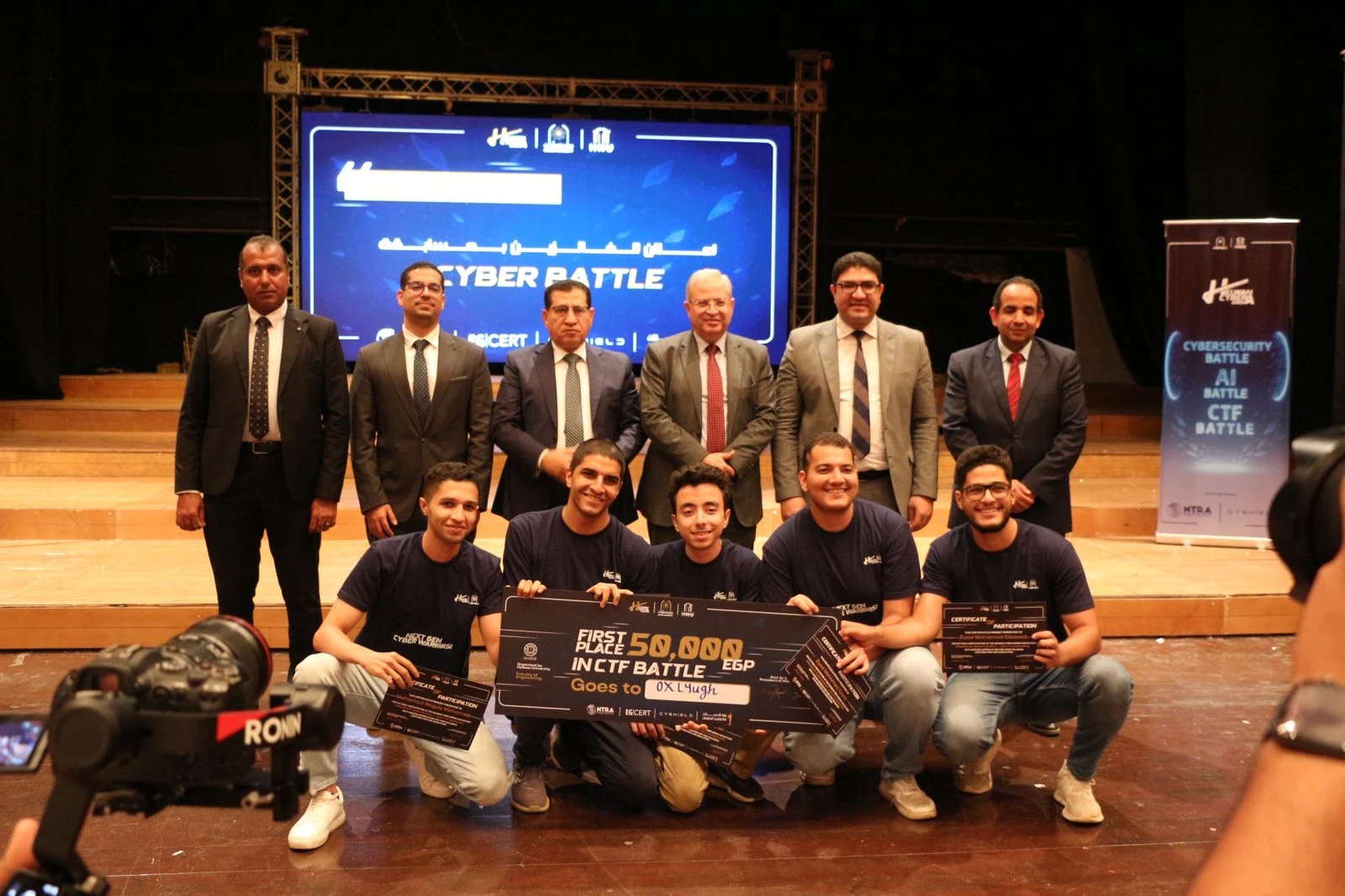
I authored AI and data challenges for Connectors CTF and IEEE Victoris 4.0. These are the writeups: the setup, the intended path, and the little traps along the way.

CTF Writeups and Solutions, Connectors Team × IEEE Victoris
Connectors CTF
Challenge author · AI & data
IEEE Victoris 4.0
Challenge author · AI security
The authoring announcement

Radio Frequency Rumble

Inspect a Random Forest, recover its hidden class, then decode a message concealed in two joined datasets.

Model inspection

BabyAI

A PCA projection reveals the hint for extracting a hidden binary message from a tabular dataset.

PCA · data decoding

Autonomous Vault System

Work through five AI guardians, collect cryptographic fragments, and reconstruct an AES-GCM vault.

Agent security · prompt injection

Give me your best AI Engineer

Canonicalization, deduplication and stable joins reveal a message buried in messy customer and order data.

Data engineering

Corrupted Research Archive

Compare a modified ResNet-18 with clean weights to recover a flag hidden in tiny perturbations.

Model forensics

El-Gayar Inc.

Engineer network-log features, identify anomalous traffic, and reconstruct the hidden message.

Anomaly detection

The Maze Runner

Explore reward shaping and policy gaps in a DQN maze agent to reach a forbidden state.

Reinforcement learning

A little competitive by nature.

Some problems come with a deadline, a leaderboard, and a team to celebrate with.

On Kaggle

Completed competitions · profile results checked 3 November 2026
CompetitionPlace / teamsFinished
CSIRO - Image2Biomass Prediction
Bronze medalwith Kareem Hesham Dallash
235 / 3,805
Stanford RNA 3D Folding Part 2238 / 1,867
Deep Past Challenge - Translate Akkadian to English291 / 2,674
BirdCLEF+ 2026473 / 4,094
Predicting Student Test Scores116 / 4,317

Work, with other people.

Internships, student teams, and the work of helping other people build things too.

AI Micromind

Agentic AI Engineering Intern

Jul – Sep 2026

Built Nomad and context-aware agent workflows; integrated agents into full-stack applications with authentication, persistent storage, and caching.

Cellula Technologies

NLP Engineering Intern

Jun – Sep 2025

Worked on text and image-to-text moderation, a LangGraph code assistant, contextual retrieval, evaluation, and containerized inference APIs.

Digital Egypt Pioneers Initiative

Data Science Intern

May – Oct 2024

Worked with healthcare, marketing, and business datasets, applied statistical analysis, and developed practical machine-learning workflows.

CAT Reloaded

Data Science Supervisor

Feb 2025 – present

Support student learning through live sessions, practical projects, and competitions in AI and data science.

Connectors

Technical Director

Oct 2024 – Jul 2026

Coordinated student-circle directors, workshops, weekly tasks, and hands-on projects across AI, embedded systems, cybersecurity, and game development.

Something worth building?

I’d like to hear about it.

Let’s talk